


The Story of the Name and Its History
It is said that the village took its name from its location among high mountains and bottomless valleys that surround it on every side. It is one of the very old villages, dating back, according to local sources, to the Aramean era. Its age is evidenced by ruins scattered across its lands, along with an abundant ancient spring that waters the village and its neighbors.
If you are looking for a quiet natural destination on the Syrian coast, away from the crowded beaches, the Sumayhiqa Waterfalls in Tartus are well worth a visit. The village lies in the mountainous countryside of Tartus, west of the city of Qadmus, surrounded by high mountains, deep valleys and dense Mediterranean forests. A visit combines water, greenery, ancient history and the simple atmosphere of village life.
Administratively, Sumayhiqa belongs to the Qadmus district of Tartus Governorate. It sits on the administrative border between the Banias and Qadmus districts, on the western slope of the Qadmus mountains. It is only a few kilometers west of the city of Qadmus (estimates range from 5 to 8 km depending on the source).
The village lies at an elevation of about 700 meters above sea level, and its lands range from roughly 450 to 750 meters. This gives it a rugged landscape of deep valleys, rocky cliffs and steep slopes, which is what lends the place its beautiful, dramatic character.
1. Hiking Along the Waterfalls and the Valley
The natural trails suit those who enjoy light hiking. Wear suitable shoes, as the rocks can be wet.
2. Camping and Eco-Tourism
The village is known among nature lovers and outdoor groups as a destination for camping and eco-tourism, thanks to its dense forests and its tranquility.
3. Photography
Kermes oak, strawberry tree, oak, laurel and terebinth, plane trees along the streams, the waterfalls and the rocky cliffs all offer photographers rich scenery.
4. Enjoying the Village Atmosphere
The villagers work in farming and animal husbandry, and visiting them is a chance to taste the produce of the coastal countryside and get to know local life.
5. Zip Line: Flying Over the Valley
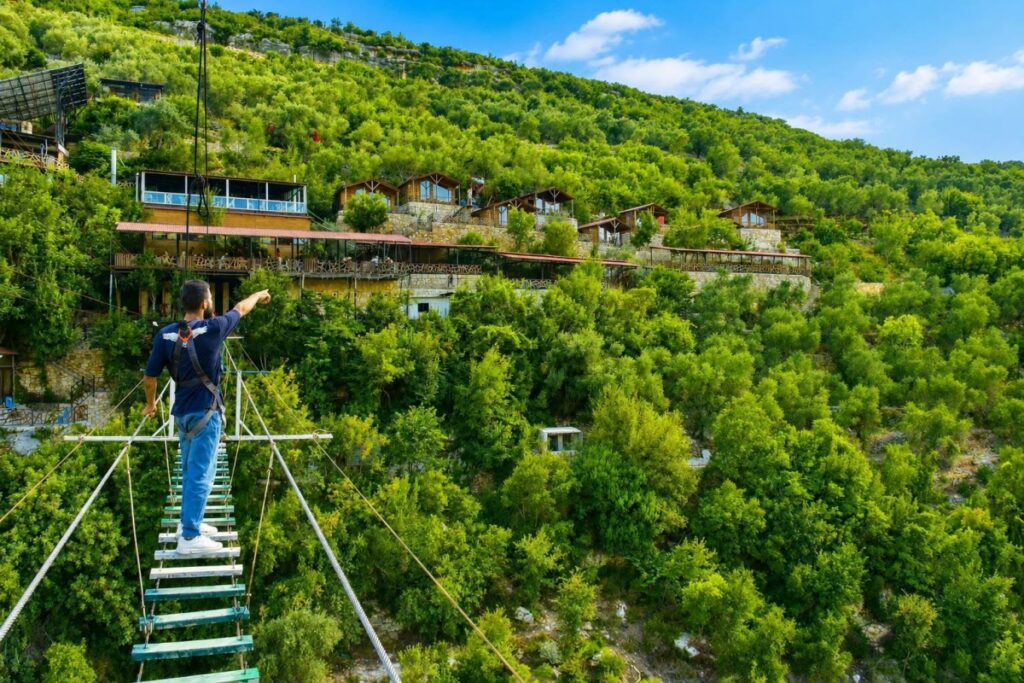
The zip line stretches between two facing mountains above the valley. According to press reports published about it, the cable is about 300 meters long and rises more than 570 meters above sea level. It is said to be the first project of its kind in Syria, and its owner is reported to be a young man from the village who built it through his own efforts. The idea is to glide by gravity between two points on a taut cable, using a special seat and safety equipment, so you feel as if you are soaring above the forest and the valley.
6. The Wooden Hanging Bridge: Walking at a Dizzying Height
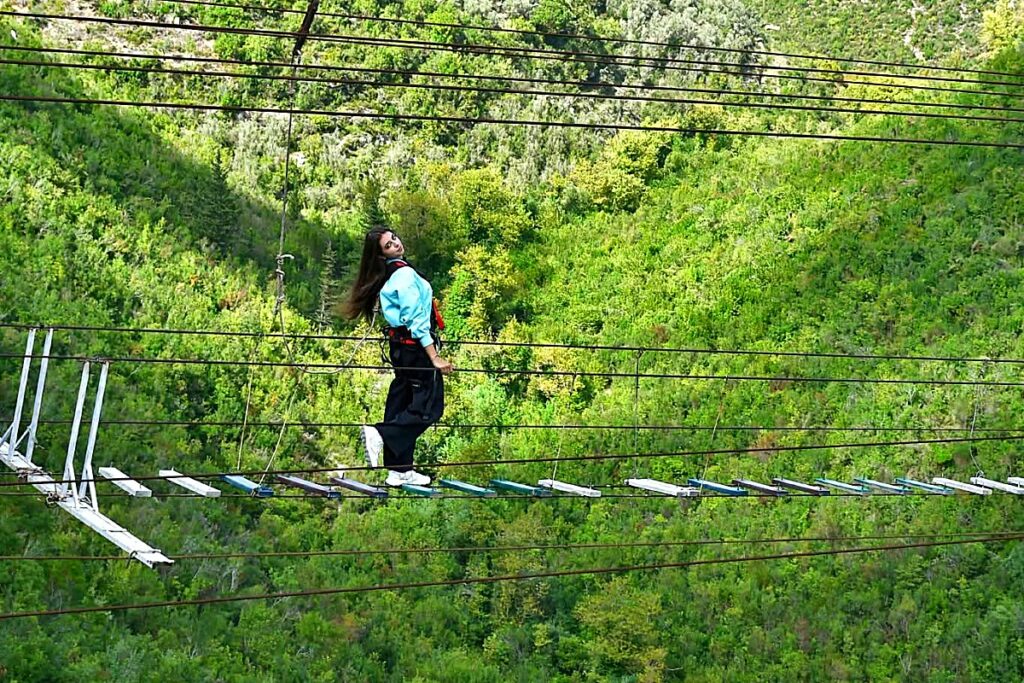
The hanging bridge is a wooden bridge that sways with your steps, and you walk across it above the valley at a height that some tourism sources estimate at around one hundred meters. It suits those who love a challenge but do not want to glide along a cable, and the view from the bridge is well worth photographing.
7. The Hanging Cable Bike
The site also offers the experience of riding a bike suspended on a cable above the valley, a fun activity for couples and friends.
Sumayhiqa Waterfalls in Tartus: The Heart of the Trip
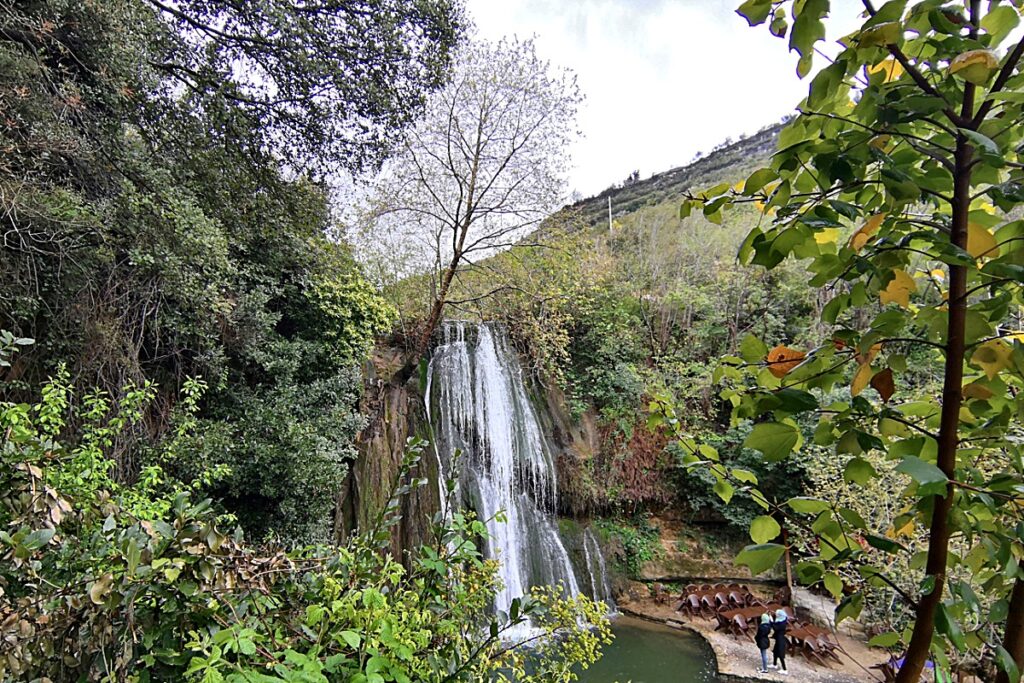
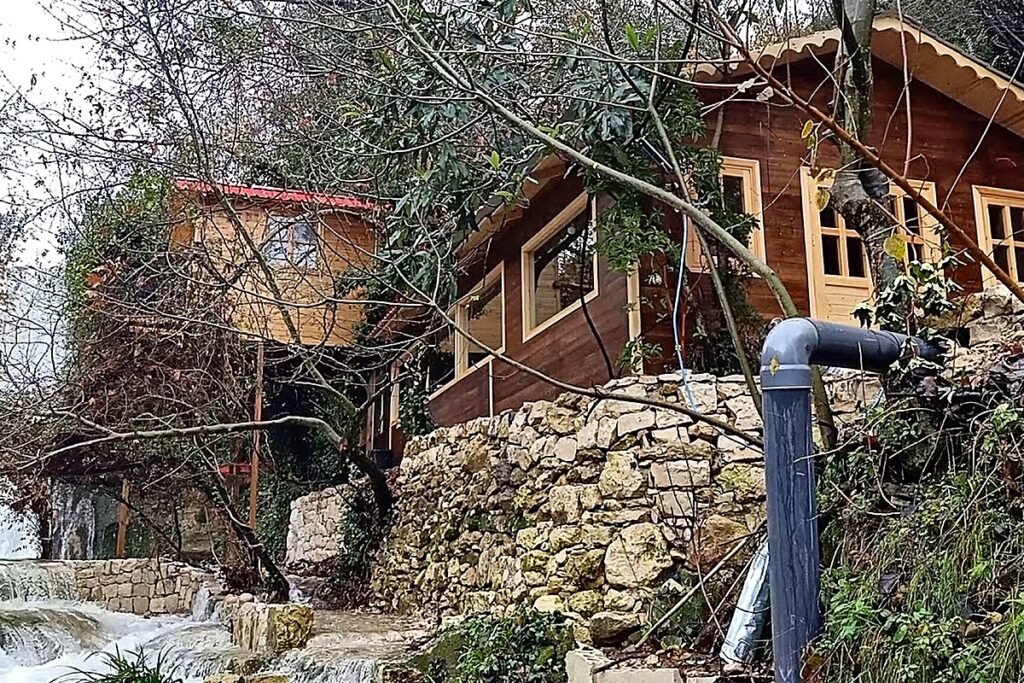
A seasonal stream runs through the village in a deep valley, forming a series of cascading waterfalls. Some tourism sources mention about seven consecutive waterfalls in the area historically known as Wadi al-Muhaymi. Dense trees surround them, making the scene ideal for photography, hiking and relaxation. An important note: the waterfalls are seasonal. They are at their most beautiful and abundant in winter and spring, and they diminish greatly or dry up in summer.
Practical Tips Before You Visit
Check the weather and road conditions before setting out, especially in winter.
Wear comfortable walking shoes and clothing suitable for high altitudes.
Bring water and food, as services in the village are limited.
Do not leave any litter behind, as this is a natural place that needs protection.
Allow half a day to a full day, including a tour of nearby Qadmus Castle.
Nearby Destinations You Can Add to Your Trip
Qadmus Castle: one of the most prominent Ismaili castles on the coast.
The City of Banias and Marqab Castle: for a trip that combines mountain and sea.
Al-Deiroun Waterfalls and other waterfalls in the Tartus countryside.
Arwad Island and Amrit: for those who want to add a coastal and historical dimension.
